


History of Coffee
In the Ethiopian highlands, where the legend of Kaldi, the goatherd, originated, coffee trees grow today as they have for centuries. Though we will never know with certainty, there probably is some truth to the Kaldi legend.
It is said that he discovered coffee after noticing that his goats, upon eating berries from a certain tree, became so spirited that they did not want to sleep at night.
Kaldi dutifully reported his findings to the abbot of the local monastery who made a drink with the berries and discovered that it kept him alert for the long hours of evening prayer. Soon the abbot had shared his discovery with the other monks at the monastery, and ever so slowly knowledge of the energizing effects of the berries began to spread. As word moved east and coffee reached the Arabian peninsula, it began a journey which would spread its reputation across the globe.
Today coffee is grown in a multitude of countries around the world. Whether it is Asia or Africa, Central or South America, the islands of the Caribbean or Pacific, all can trace their heritage to the trees in the ancient coffee forests on the Ethiopian plateau.
Coffee is one of the most popular drinks worldwide. Millions of people enjoy it daily. In addition to Caffeine it is reach in antioxidants which protect our immune system. Caffeine is a mild stimulant and to many people it brings high level of alertness, concentration, mental and physical performance.
The Ready-to-Drink Coffee has filled a gap in consumers’ demand that is for a consumer to enjoy his favorite coffee drink in the flavour he wants, anytime, anywhere without prior preparation.
Coffee Comes to Europe |
||
 |
||
|
17th Cent. 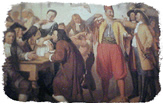 |
|
European travellers to the Near East brought back stories of the unusual dark black beverage. By the 17th century, coffee had made its way to Europe and was becoming popular across the continent. Opponents were overly cautious, calling the beverage the ‘bitter invention of Satan.’ With the coming of coffee to Venice in 1615, the local clergy condemned it. The controversy was so great that Pope Clement VIII was asked to intervene. Before making a decision however, he decided to taste the beverage for himself. He found the drink so satisfying that he gave it Papal approval. |
The Arabian Peninsula |
||
|
||
The Arabs were the first, not only to cultivate coffee but also to begin its trade. By the fifteenth century, coffee was being grown in the Yemeni district of Arabia and by the sixteenth century it was known in Persia, Egypt, Syria and Turkey. Its popularity was perhaps due, in part, to the fact that Muslims, forbidden alcoholic drink by the Koran, found coffee’s energizing properties to be an acceptable substitute. |
|
11th Cent. 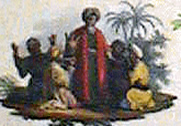 |
The New World |
||
|
||
|
1600 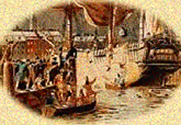 |
|
In the mid-1600’s, coffee was brought to New Amsterdam, a location later called New York by the British. Though coffee houses rapidly began to appear, tea continued to be the favored drink in the New World until 1773 when the colonists revolted against a heavy tax on tea imposed by King George. The revolt, known as the Boston Tea Party, would forever change the American drinking preference to coffee. |
MR BROWN came to Cyprus! |
||
|
||
In 1995, the company anticipating a specific trend in the market started importing very conservatively at first, the ready-to-drink “Mr Brown” Coffee in tins of 240ml in 8 different flavours. Consumers were given the opportunity to choose their preferred flavour and drink the coffee anytime and anywhere. This concept rapidly grew in popularity across a wide cross section of the population and ever since Mr Brown took a very commanding lead in the market. |
|
17th Cent.  |
Plantations Around the World |
||
|
||
|
17th Cent. 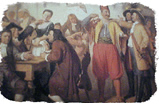 |
|
As demand for the beverage continued to spread, there was tense competition to cultivate coffee outside of Arabia. Though the Arabs tried hard to maintain their monopoly, the Dutch finally succeeded, in the latter half of the 17th century, to obtain some seedlings. Their first attempts to plant them in India failed but they were successful with their efforts in Batavia, on the island of Java in what is now Indonesia. The plants thrived and soon the Dutch had a productive and growing trade in coffee. They soon expanded the cultivation of coffee trees to the islands of Sumatra and Celebes. |
Latest News

Such is the love for MR. BROWN that 2 Cypriot fans are seen to be enjoying ...

Award to winners of the Mr Brown competition on Facebook. Prizes included ...


 Tel: +357 22 612121